English irregular verbs — all three forms
Irregular verbs cannot be worked out from a rule — they have to be memorised. Here are all 175 that matter: go · went · gone and the other 174, with plain-English meanings and real example sentences.
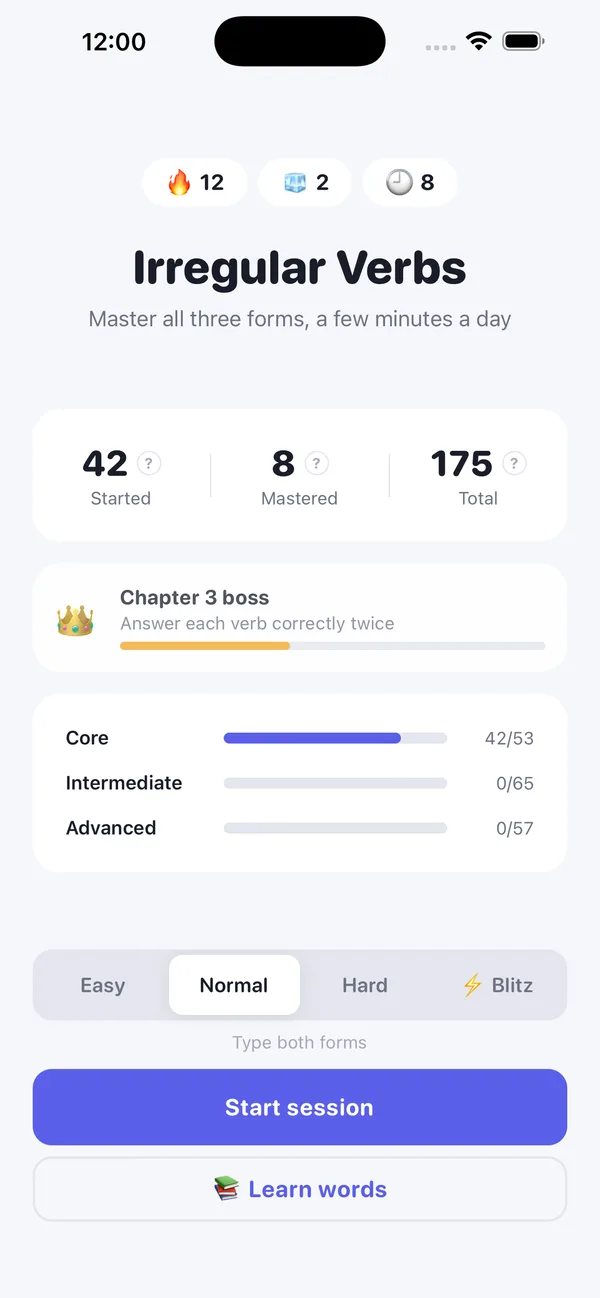
Practise all 175 verbs on your phone
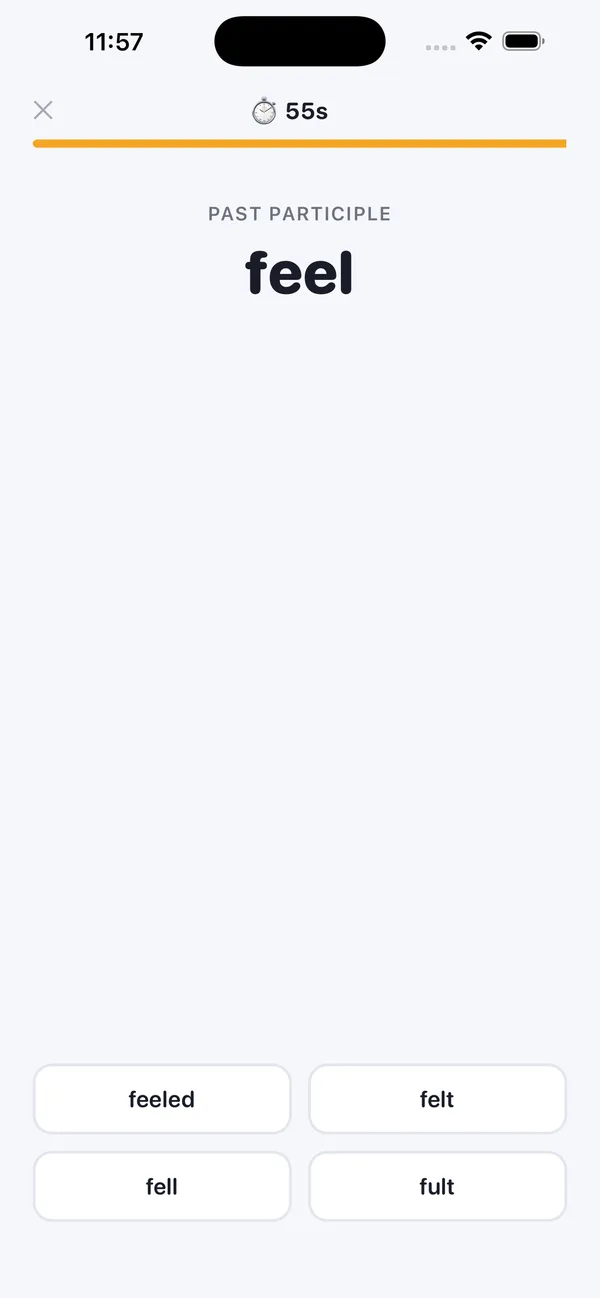
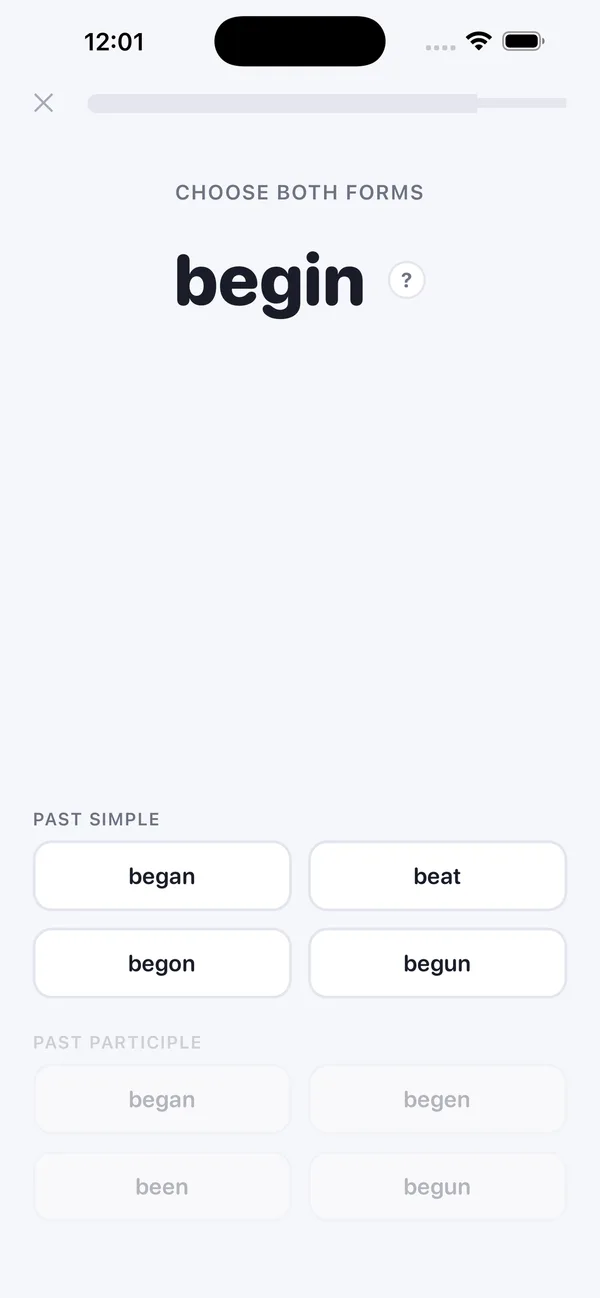
Spaced repetition brings each verb back right before you would forget it. Three difficulty modes, a 60-second Blitz, streaks and a verb collection. Free, works offline, no account.
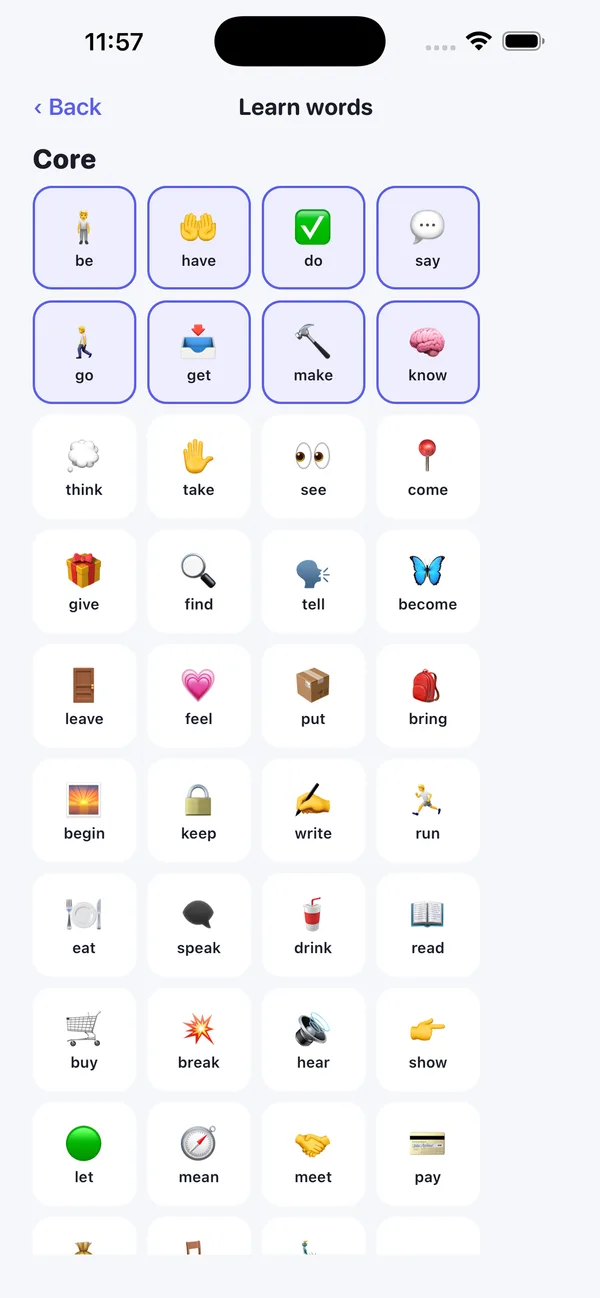
Start with the most common verbs
behavedosaygogetmakeknowthinktakeseecomegivefindtellbecomeleavefeelputbringbeginkeepwriteruneatspeakdrinkreadbuybreak
Learn by pattern, not by list
Irregular verbs are not random. They fall into families, and learning the pattern beats learning 175 separate words:
- One form fits all — put · put · put: All three forms are identical. Learn one word, get three.
- There and back — come · came · come: The participle echoes the base form — only the past changes.
- i → a → u — sing · sang · sung: The vowel walks through i, a, u. A whole choir of verbs follows it.
- The -ought gang — think · thought · thought: Wildly different bases, identical endings: -ought / -aught.
- ew → own — know · knew · known: Past in -ew, participle in -own. Blow, grow, throw all play along.
- The -en finishers — take · took · taken: The participle ends in -en or -n; the past does its own thing.
- Twins — have · had · had: Past simple and participle are the same word — learn two, not three.
- Free spirits — go · went · gone: The rebels that follow no pattern. Pure memorisation — sorry.
Guides
Full list of 175 verbs
What is a past participle
V1 V2 V3 explained
The past simple
Past simple vs present perfect
Regular vs irregular
The app behind this site
Every page here is generated from the same verb data the app uses, so the forms you read are the forms you practise.
Spaced repetitionEach verb returns for review just before you would forget it — answer well and the gap grows.
Three difficultiesRecognise the forms, type them from memory, or complete a real sentence.
Hear every verbTap to hear the pronunciation, including the traps like read / read.
Learn by patternVerbs are grouped into families, so you learn the system instead of 175 separate words.