Home → Irregular verbs → One form fits all
One form fits all
All three forms are identical. Learn one word, get three. The model to keep in your head is put · put · put, and 22 of the 175 verbs on this site follow it.
Where this group comes from
These are the verbs English gave up on. Look at how they end — cut, put, hit, shut, cost, let — almost all of them already finish in a -t or a -d, which is roughly the sound the past ending would have added. Rather than say the ending twice, the language stopped saying it at all.
That makes them the easiest group to learn and the easiest to misuse. There is no signal in the word itself, so I cut it yesterday and I cut it every day differ only in the words around them. Learners who want the past to feel like a past reach for cutted and putted, and there is nothing in the verb to stop them.
All 22 verbs in this pattern
| Base form | Past simple | Past participle |
|---|---|---|
| put | put | put |
| read | read | read |
| let | let | let |
| cost | cost | cost |
| cut | cut | cut |
| hurt | hurt | hurt |
| hit | hit | hit |
| shut | shut | shut |
| spread | spread | spread |
| set | set | set |
| quit | quit | quit |
| bet | bet | bet |
| burst | burst | burst |
| shed | shed | shed |
| fit | fit / fitted | fit / fitted |
| wet | wet / wetted | wet / wetted |
| upset | upset | upset |
| cast | cast | cast |
| split | split | split |
| broadcast | broadcast / broadcasted | broadcast / broadcasted |
| bid | bid / bade | bid / bidden |
| wed | wed / wedded | wed / wedded |
Covered in detail here
These 7 verbs are rare enough that a separate page would mostly repeat the explanation above. What is worth saying about each of them is said here instead.
bet · bet · bet
🎲 To risk money on a result. Number 101 of 175 by frequency — common in reading and television, less so in your own speech, and all three forms are the same word. Recognising it is the priority.
- Past simple: He bet ten dollars on the game.
- Past participle: I have never bet on horses.
shed · shed · shed
🐍 To let something fall off, like skin or leaves. Number 107 of 175 by frequency — common in reading and television, less so in your own speech, and all three forms are the same word. Recognising it is the priority.
- Past simple: The snake shed its skin.
- Past participle: The trees have shed their leaves.
Mistakes people make with “shed”.
Not “shedded”. Shed does not take -ed — the past simple is shed, however regular it feels to add the ending.
fit · fit / fitted · fit / fitted
📏 To be the right size or shape. Number 112 of 175 by frequency — common in reading and television, less so in your own speech, and all three forms are the same word. Recognising it is the priority.
- Past simple: The dress fit her perfectly.
- Past participle: They have fit new locks on the doors.
British and American English.
British English says fitted. American English uses fit for all three forms when talking about size, and fitted when talking about installing something.
wet · wet / wetted · wet / wetted
💧 To make something wet with water. Number 113 of 175 by frequency — common in reading and television, less so in your own speech, and all three forms are the same word. Recognising it is the priority.
- Past simple: She wet the cloth and wiped the table.
- Past participle: The rain has wet everything.
British and American English.
Wet for all three forms in British English; American English often prefers wetted for the deliberate act.
upset · upset · upset
😟 To make someone sad or worried. Number 117 of 175 by frequency — common in reading and television, less so in your own speech, and all three forms are the same word. Recognising it is the priority.
- Past simple: The news upset her deeply.
- Past participle: He has upset his mother again.
Mistakes people make with “upset”.
Not “upseted”. Upset does not take -ed — the past simple is upset, however regular it feels to add the ending.
broadcast · broadcast / broadcasted · broadcast / broadcasted
📡 To send out a program on TV or radio. Number 155 of 175 by frequency, so one of the rarer ones: all three forms are the same word. You will meet it in books and set phrases more than in conversation, and it can wait.
- Past simple: The station broadcast the match live.
- Past participle: The interview has been broadcast twice.
British and American English.
Broadcast is unchanged in all three forms. Broadcasted appears occasionally and still sounds wrong to most ears.
wed · wed / wedded · wed / wedded
💍 To marry. Number 170 of 175 by frequency, so one of the rarer ones: all three forms are the same word. You will meet it in books and set phrases more than in conversation, and it can wait.
- Past simple: They wed in a small chapel.
- Past participle: She has wed her college sweetheart.
British and American English.
Mostly a headline word now. Both wed and wedded work, with wedded surviving mainly as an adjective: wedded bliss.
Practise all 175 verbs on your phone
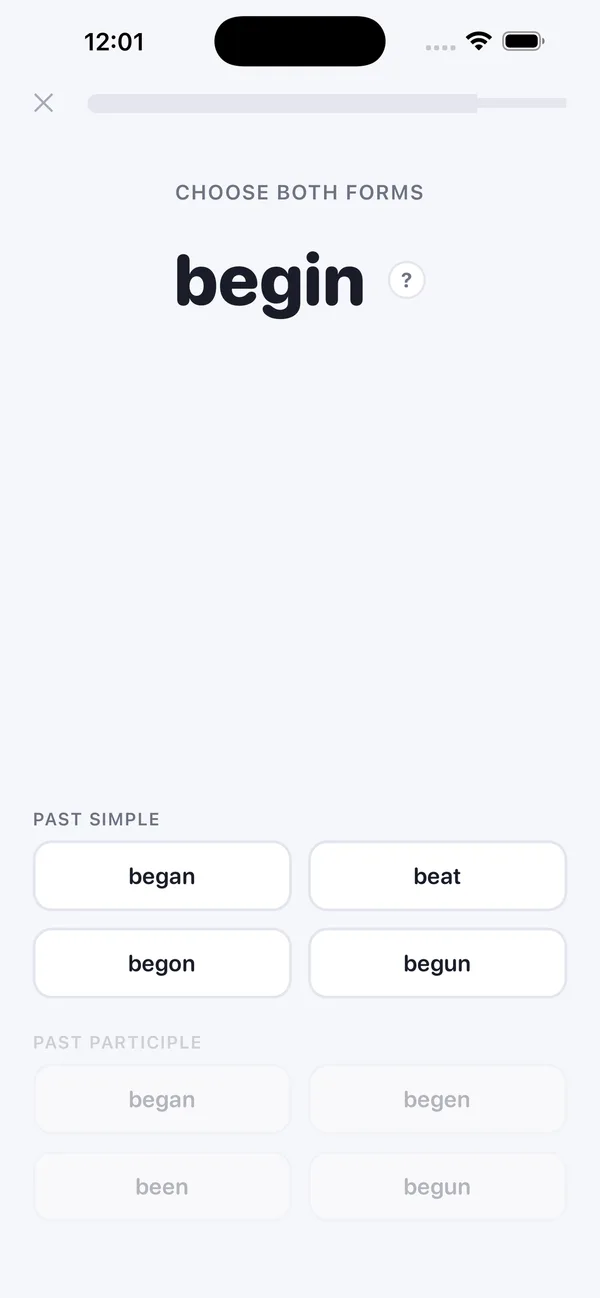
Spaced repetition brings each verb back right before you would forget it. Three difficulty modes, a 60-second Blitz, streaks and a verb collection. Free, works offline, no account.